Constitution of India · Art. 131 · Judgment of
Court declines to monitor Cauvery releases, leaving oversight to CWMA and CWRC
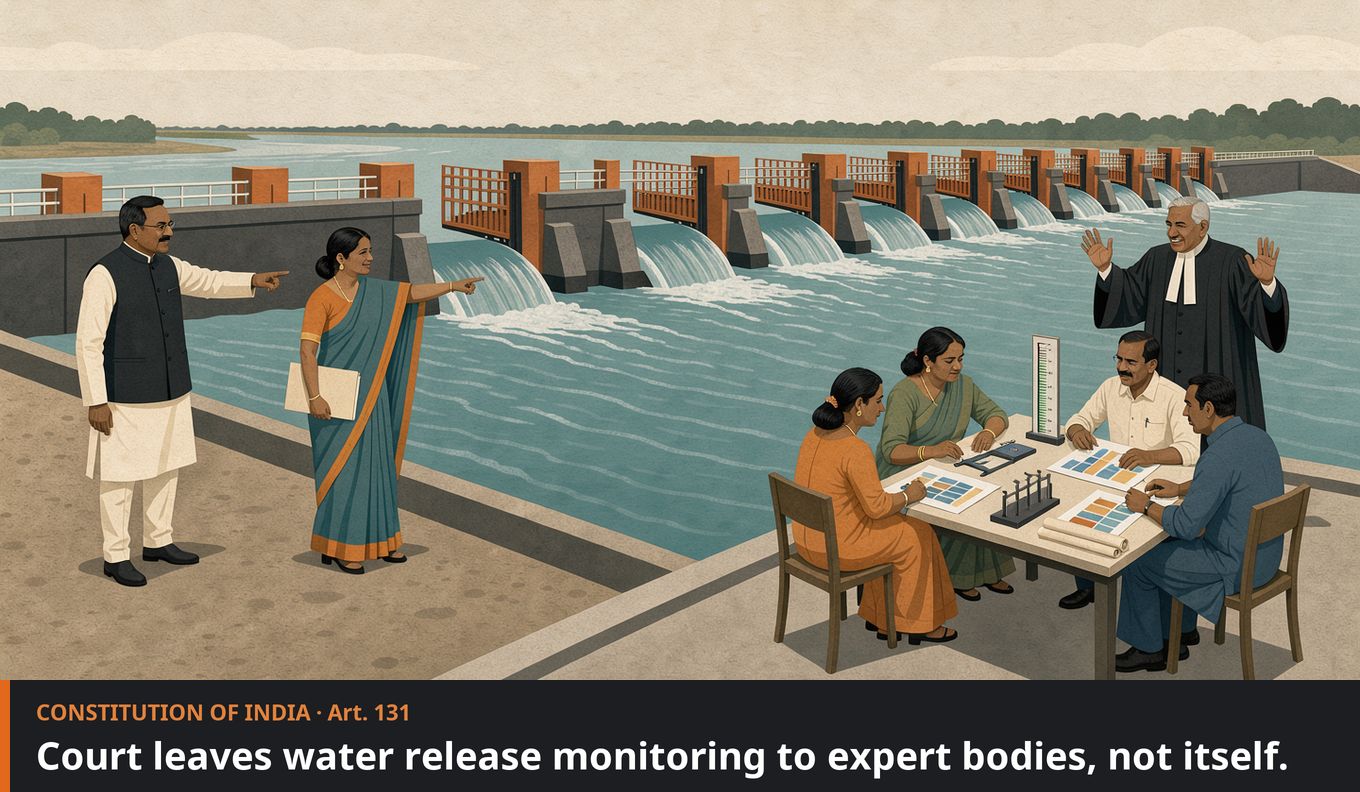
The facts
- The Cauvery water-sharing dispute among Karnataka, Kerala, Tamil Nadu and Puducherry was adjudicated by the Supreme Court in 2018, modifying the Tribunal's 2007 award.
- The Union of India notified the Cauvery Water Management Scheme in 2018, establishing the CWMA and CWRC to oversee implementation of the water-sharing arrangements.
- Tamil Nadu sought directions against Karnataka for alleged shortfall in water releases at Billigundulu during the 2026-27 irrigation year, citing CWMA decisions.
- Karnataka stated it complied with CWMA directions, and the CWMA recorded in its 58th meeting that there was no backlog shortfall.
What the Court held
The Supreme Court should not assume the role of monitoring and enforcing a release schedule, a function entrusted to expert bodies constituted under a court-approved scheme.
Laid down · para 13
Other principles
Assessment of distress and quantification of shortfall across an inter-State river basin fall within the domain of the expert regulatory bodies, not the Court.
Laid down · para 21
The scope of a tribunal's award should not be enlarged by entertaining claims of a person who was not a party to the original proceedings before the tribunal.
Laid down · para 28
Summaries are for information and are not legal advice. Read the full judgment before relying on it. See also our disclaimer.