Article 32 petition to reopen concluded pension dispute dismissed as barred by finality
Facts that mattered
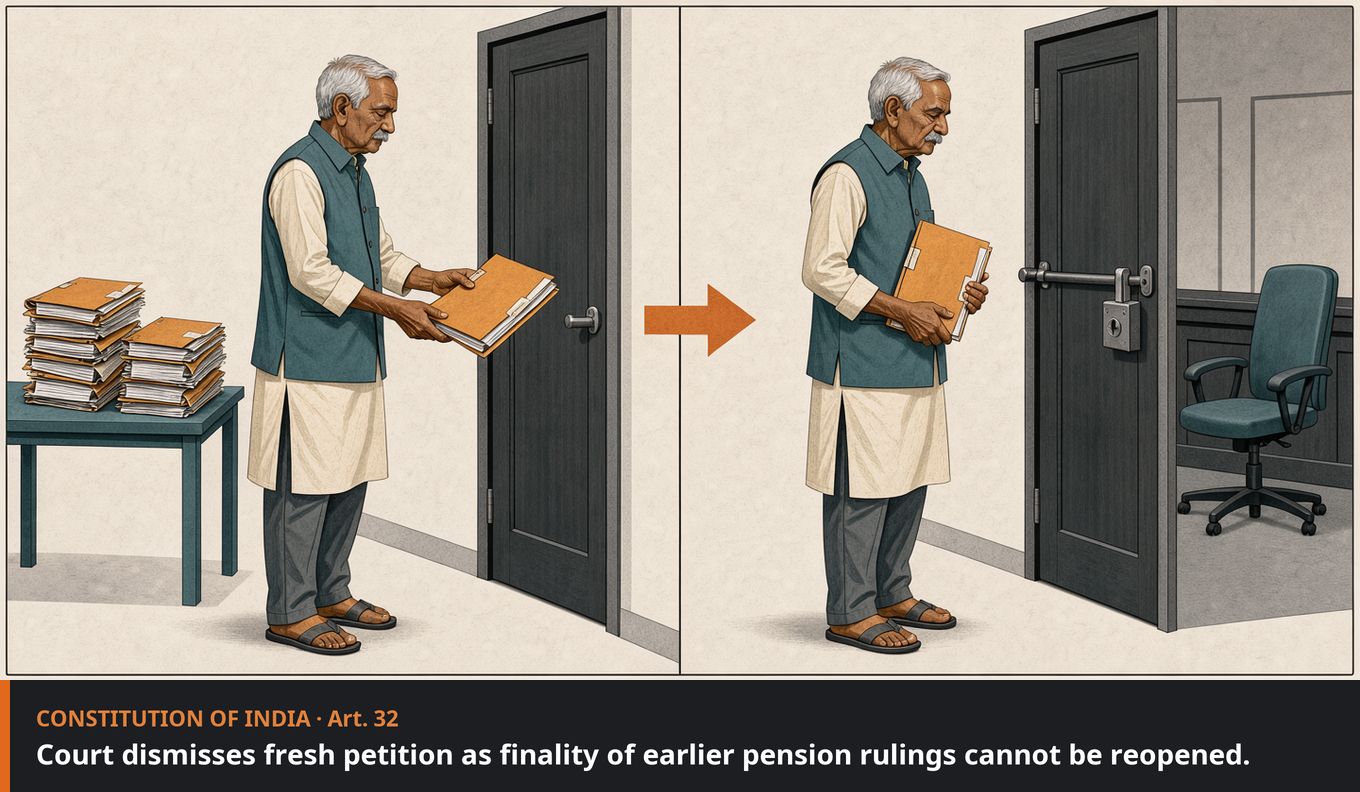
The petitioner served as a teacher at Umairabad High School from 1961 to 1973 before joining Kendriya Vidyalaya Sangathan, retiring in 1997.
His claim to count the earlier service for pension was repeatedly rejected by the CAT, the Patna High Court and this Court.
The Patna High Court on 10.10.2023 held the controversy had attained finality and dismissed his writ petition; his SLP against it was dismissed on 20.09.2024.
He then filed the present Article 32 petition seeking recomputation of pension, recasting the same grievance in a different form.
Legal concepts
An order of a High Court cannot be collaterally challenged in proceedings under Article 32; if erroneous, correction must be sought through the appropriate appellate or revisional process.
Reaffirmed · para 22 · Naresh Shridhar Mirajkar vs. State of Maharashtra, AIR 1967 SC 1 (9-judge bench), para 22
An order of a High Court can neither be challenged nor set aside through an Article 32 proceeding.
Reaffirmed · para 23 · Bilkis Yakub Rasool vs. Union of India, (2024) 5 SCC 481, para 23
Finality of judicial proceedings cannot be defeated by a litigant merely by recasting the consequential relief sought.
Laid down · para 20
The nomenclature of a proceeding or the manner in which a grievance is recast cannot alter its true character.
The Executive Engineer and Administrative Officer v. Kottaisamy, C.A. No.-002521-002523 - 2026
Bench: HON'BLE MR. JUSTICE SANJAY KUMAR, HON'BLE MR. JUSTICE SANJEEV SACHDEVA (2 judges). Judgment by HON'BLE MR. JUSTICE SANJAY KUMAR
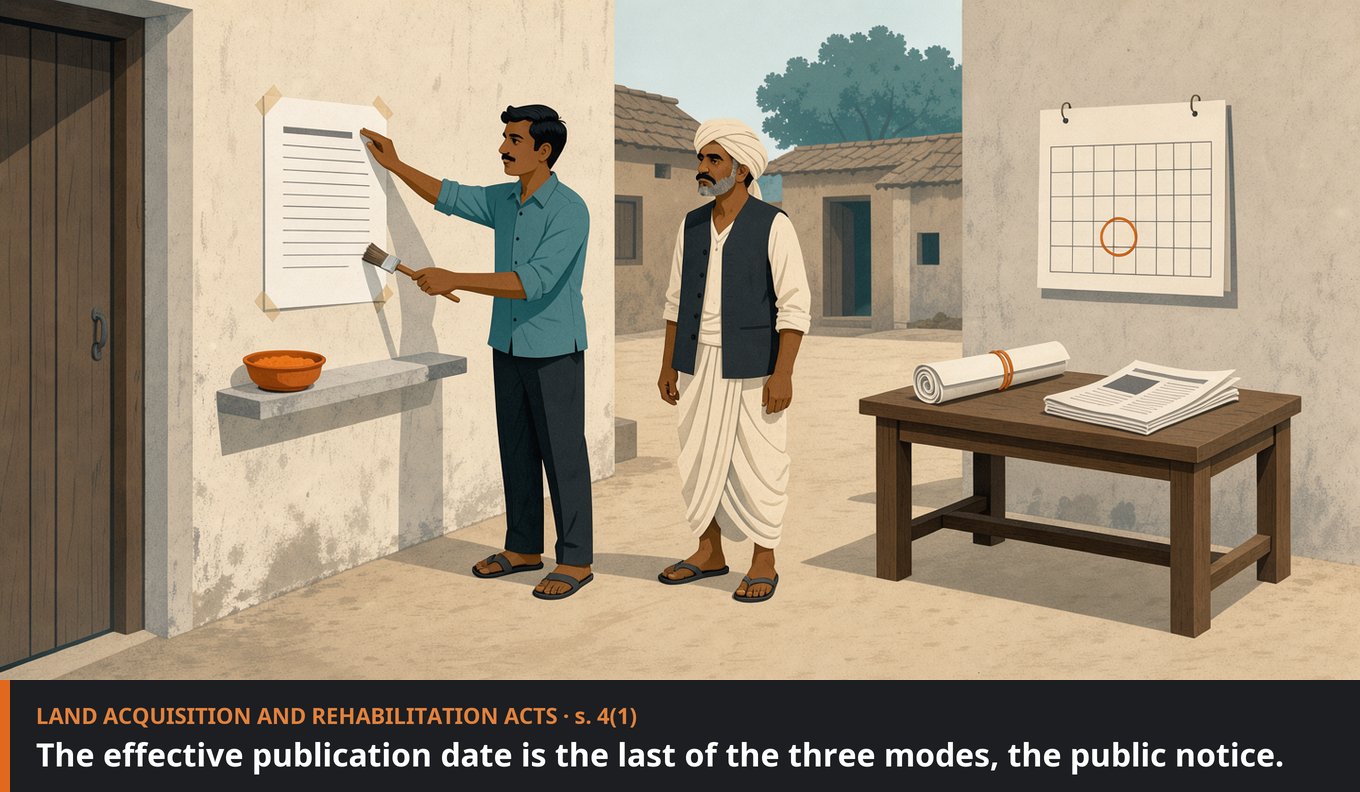
For s. 23(1A) compensation, the effective publication date is the last of the three modes under s. 4(1).
Facts that mattered
The issue was the interpretation of Section 4(1) of the Land Acquisition Act, 1894 as amended in 1984, in the context of Section 23(1A) inserted by the same amendment.
Section 4(1) as amended requires publication of the notification in three modes: Official Gazette, two newspapers, and public notice by the Collector; the last date of these is the date of publication.
The Madras High Court held that for Section 23(1A), the first date of publication, i.e., in the Official Gazette, was the relevant date, relying on Kolkata Metropolitan Development Authority.
The Supreme Court set aside the High Court judgment, holding that the effective date for Section 23(1A) is the date of the third mode, i.e., public notice in the locality.
Legal concepts
The same words used in different parts of a statute may bear different meanings depending on the context in which they are used.
Reaffirmed · para 6 · Kolkata Metropolitan Development Authority vs. Gobinda Chandra Makal and another, (2011) 9 SCC 207, para 5
For purposes of Section 23(1A), the effective date of publication of the notification under Section 4(1) is the date of the last of the three modes of publication, i.e., public notice by the Collector in the locality.
Laid down · para 9
The rationale for taking the first date of publication under Section 23(1) does not apply to Section 23(1A), which aims to compensate landowners for delay from the effective date of publication.
Laid down · para 9 · K.S. Paripoornan vs. State of Kerala and others, (1994) 5 SCC 593, para 8
Transmission Corporation of Andhra Pradesh Limited Represented by Its Director, v. Jaladi Sita Rama Koteswara Rao, C.A. No.-008998-009000 - 2026
Bench: HON'BLE MR. JUSTICE SATISH CHANDRA SHARMA, HON'BLE MR. JUSTICE NONGMEIKAPAM KOTISWAR SINGH (2 judges). Judgment by HON'BLE MR. JUSTICE SATISH CHANDRA SHARMA
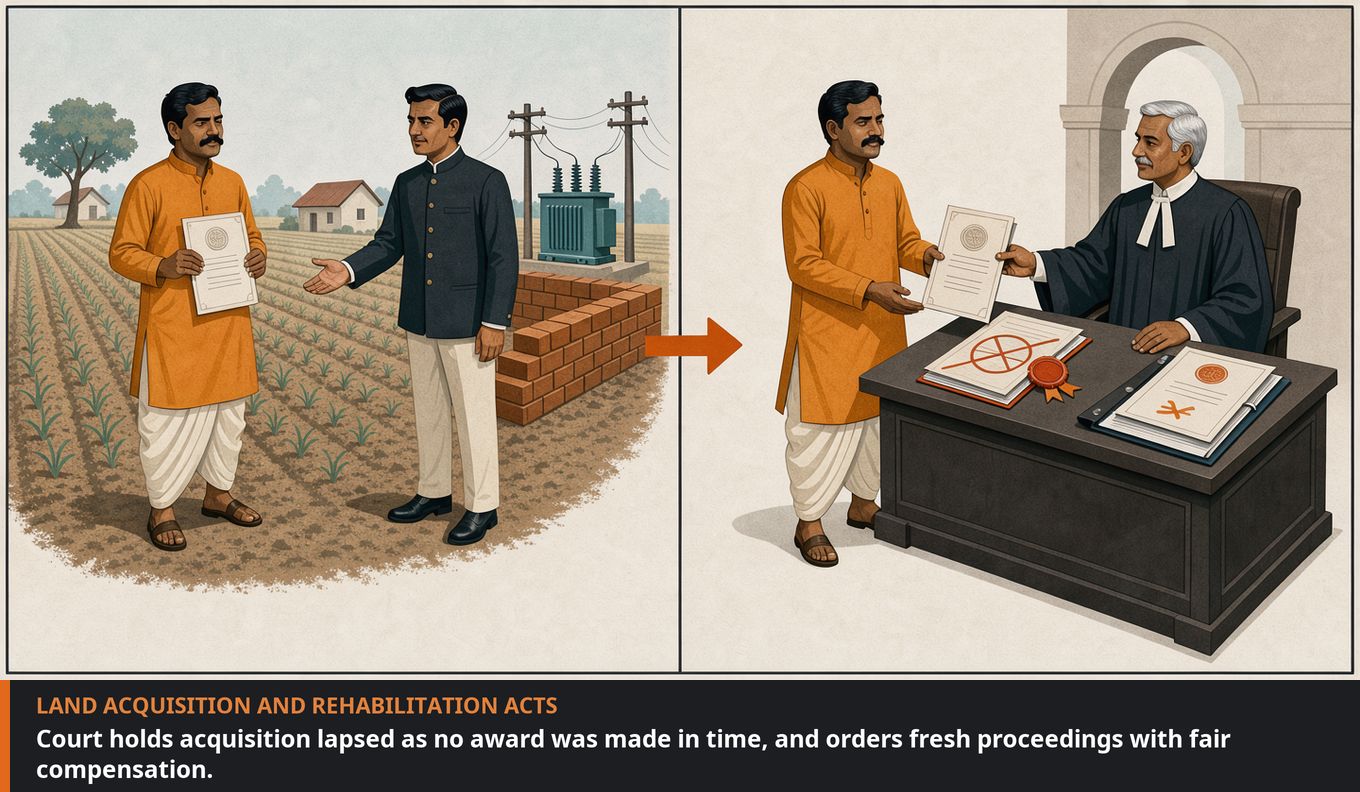
Court upholds lapse under s. 11-A and directs fresh acquisition with compensation under law in force
Facts that mattered
The Board took possession of the land in 1990-91 with landowners' consent before any Section 4(1) notification, for a sub-station at Tenali.
Section 4 and Section 6 notifications were later issued but no award was made within the period prescribed by Section 11-A, and the lapse was admitted by the Board and the RDO.
The High Court held the acquisition lapsed and the 1999 awards non est, and directed fresh acquisition proceedings with compensation under the law in force.
The appellant-Corporation sought moulding of relief to limit compensation, but the Supreme Court upheld the High Court's direction.
Legal concepts
The scheme of the Land Acquisition Act does not contemplate taking possession prior to the Section 4(1) notification, and possession taken before it is dehors the Act, leaving title with the landowner.
Reaffirmed · para 17
Even where Section 17(1) is invoked, non-compliance with Section 17(3-A) prevents absolute vesting and attracts lapse under Section 11-A.
Reaffirmed · para 21
If lapse under Section 11-A operates where the urgency clause is invoked without deposit under Section 17(3-A), it operates a fortiori where the urgency clause was never invoked at all.
Laid down · para 22
There can be no estoppel against a statute, and amounts received under awards after lapse must be adjusted but cannot revive proceedings that lapsed by operation of law.
Laid down · para 26
Where acquisition proceedings lapse under Section 11-A and title never vests in the State, the only courses open are restoration of the land or fresh acquisition under the law in force.
Cgst and Central Excise v. M/s Indore Treasure Market City Pvt Ltd, C.A. No.-014942-014942 - 2026
Bench: HON'BLE MR. JUSTICE SANJAY KUMAR, HON'BLE MR. JUSTICE SANJEEV SACHDEVA (2 judges). Judgment by HON'BLE MR. JUSTICE SANJAY KUMAR
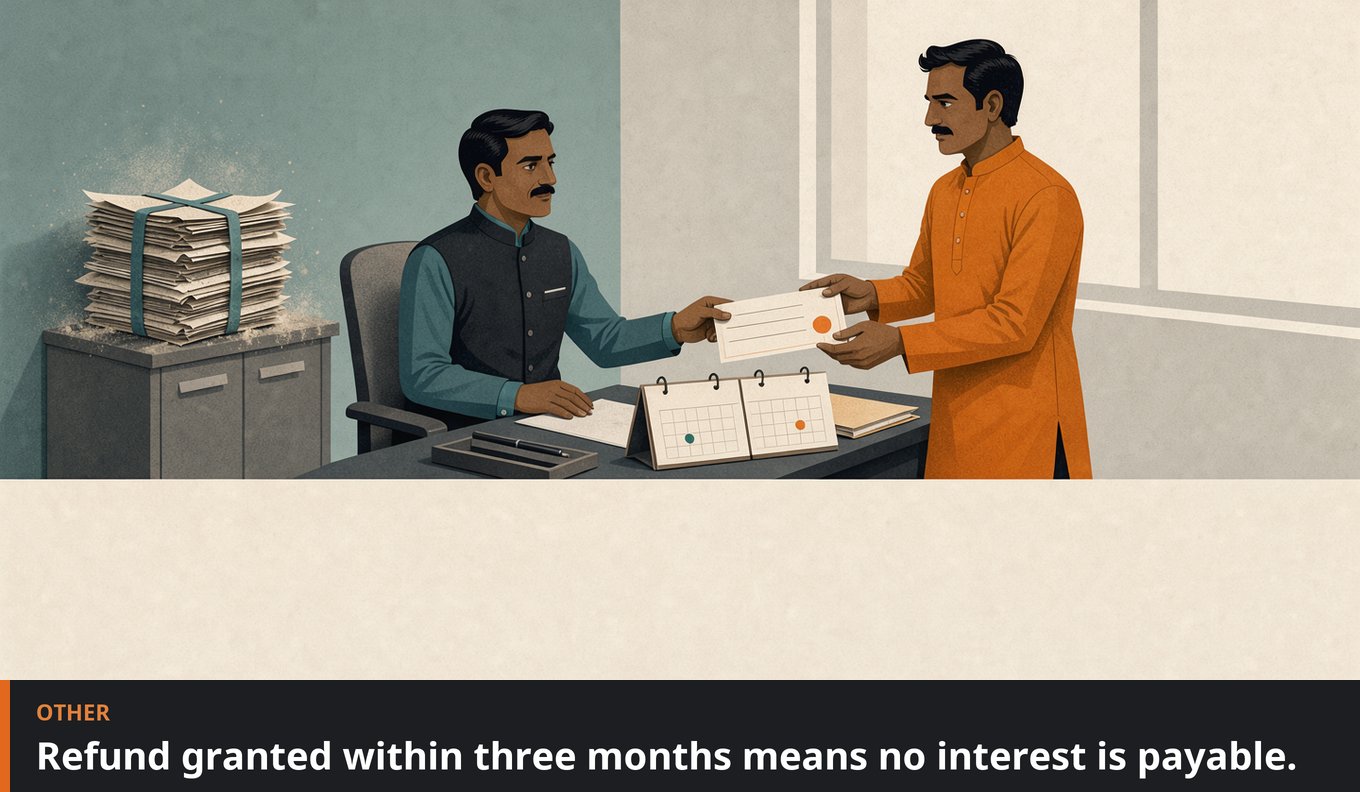
Supreme Court denies interest on refund where refund was granted within three months
Facts that mattered
The assessee was denied CENVAT credit of Rs.10,21,04,601 by an Order-in-Original dated 10.02.2014 and reversed the credits under protest in June and July 2015.
It filed an appeal only on 17.02.2020, over six years later; CESTAT condoned the delay of 2102 days and allowed the appeal on 01.09.2021.
On remand, refund of Rs.7,15,09,643 was quantified; the assessee applied on 04.01.2022 and refund was sanctioned on 02.02.2022 within three months, so no interest was payable under Section 11BB.
CESTAT and the High Court wrongly treated the refund as a pre-deposit or investigation deposit and awarded 12% interest; the Supreme Court set aside those orders.
Legal concepts
Interest under Section 11BB is payable only if duty ordered to be refunded is not refunded within three months from the date of receipt of the refund application.
Reaffirmed · para 13
An assessee who sleeps on its rights for years cannot claim interest on a refund to enrich itself, and delay attributable to the assessee bars such a claim.
This digest summarises Supreme Court of India judgments for general information. It is not legal advice and does not create a lawyer-client relationship. Please read the full judgment before relying on it. See also our disclaimer.