Constitution of India · Art. 226 · Judgment of
Court clarifies highway encroachment directions do not authorise demolition without statutory procedure
The facts
- The suo motu proceedings arose from road accidents at Phalodi, Rajasthan, and the Court issued directions on 13.04.2026 requiring removal of unauthorised encroachments from National Highway Right of Way.
- NHAI initiated demolition action against structures alleged to be encroachments, and numerous applicants claimed ownership of privately held land adjoining National Highways.
- Applicants disputed NHAI's demarcation of the Right of Way and contended the directions did not authorise demolition without following the statutory procedure under the 2002 Act.
- The Court had earlier granted interim protection and status quo in several matters pending resolution of these applications.
What the Court held
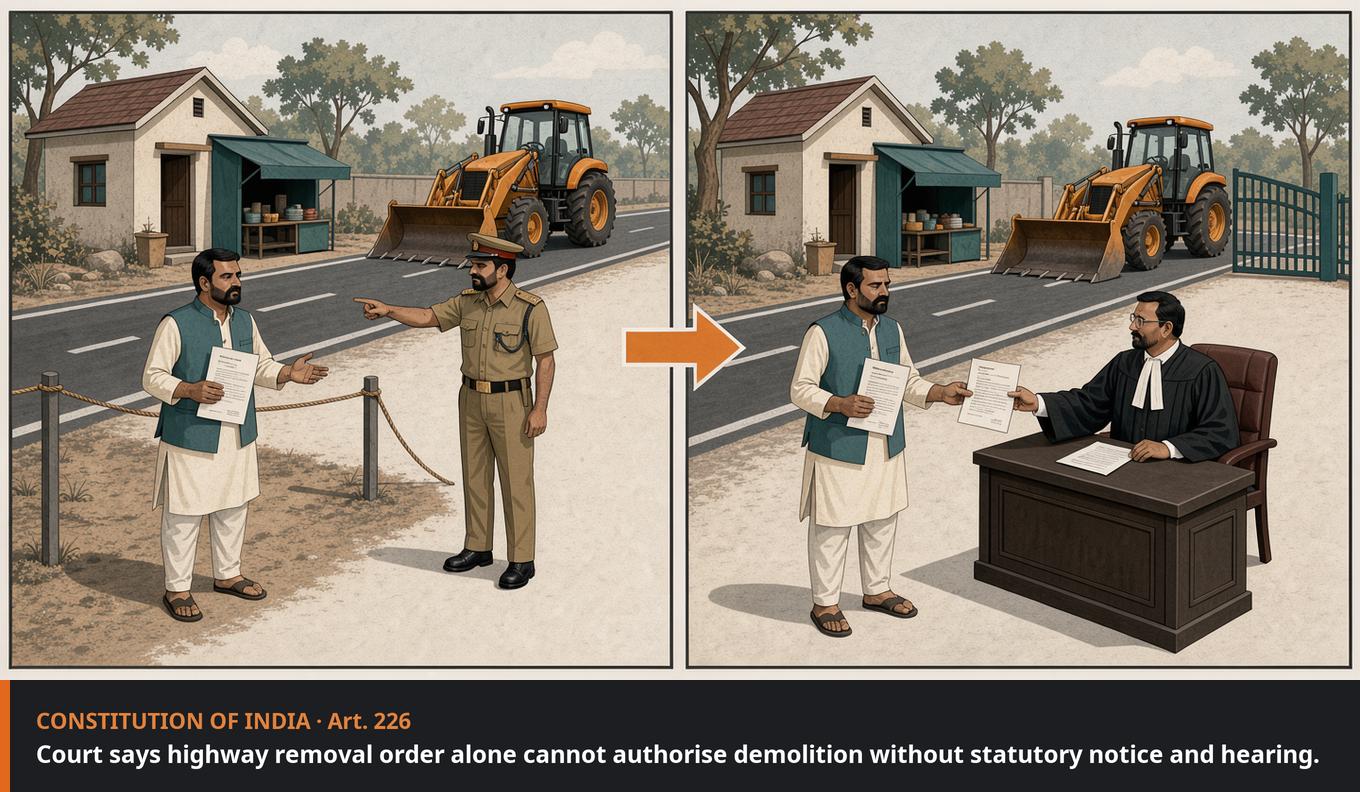
A general direction to remove encroachments is not a conclusive adjudication that a particular structure is an unauthorised encroachment, and cannot dispense with the statutory determination required under law.
Laid down · para 15
Other principles
Section 26 of the Control of National Highways (Land and Traffic) Act, 2002 prescribes the essential procedure of notice, representation and consideration of cause shown, required for compliance with natural justice before removal of unauthorised occupation.
Reaffirmed · para 16 · Gyan Prakash v. Union of India and Others, 2025 SCC OnLine SC 1189, para 16
Individual disputes over ownership, boundaries and Right of Way demarcation arising from highway encroachment removal are to be adjudicated by the jurisdictional High Courts rather than in suo motu Supreme Court proceedings directed at systemic road safety issues.
Laid down · para 18
Summaries are for information and are not legal advice. Read the full judgment before relying on it. See also our disclaimer.