Constitution of India · Art. 226 · Judgment of
Court awards Rs 10 lakh compensation for termination contrary to a High Court consent order
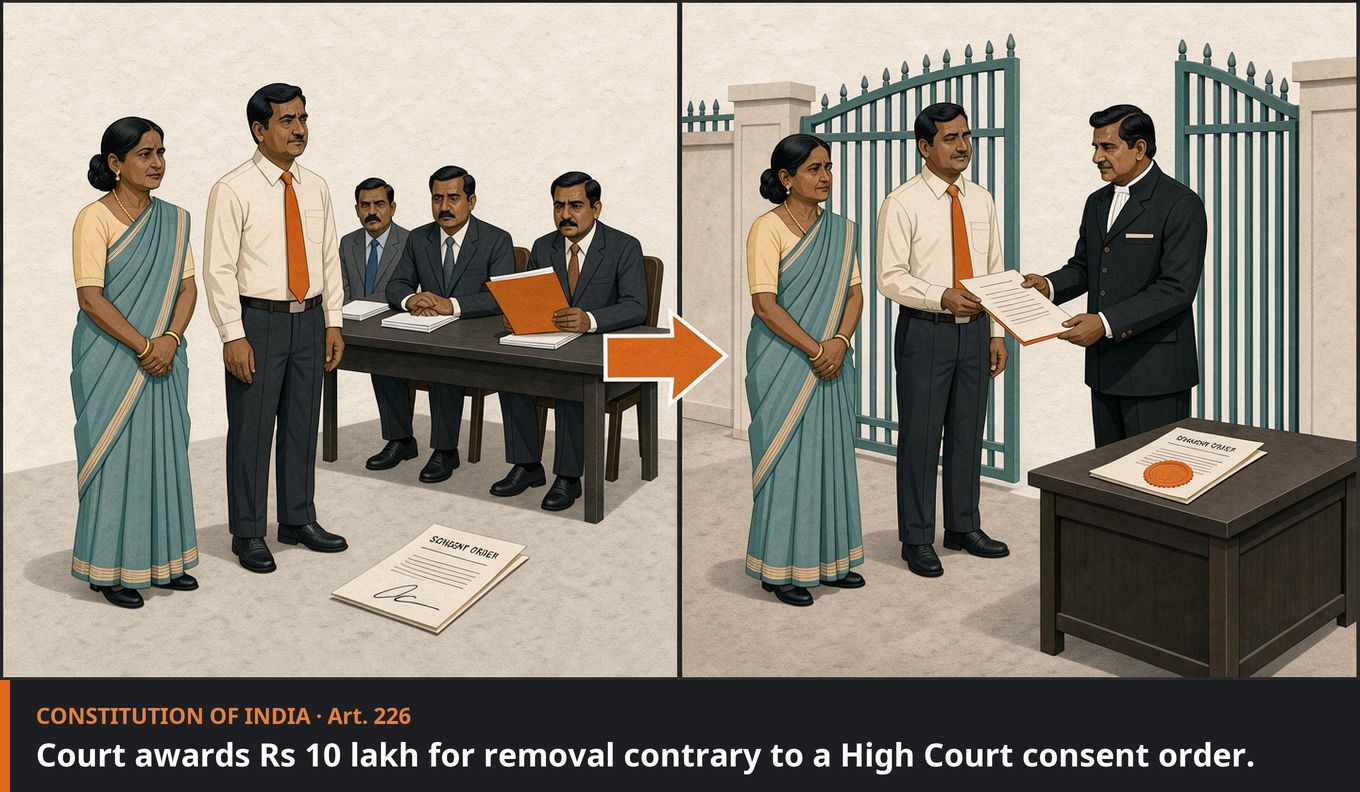
The facts
- The appellants, a senior clerk and a head clerk, faced departmental proceedings for misappropriation of public money in a private school.
- They objected to inquiry committee members, then abstained from the inquiry, which proceeded ex parte, and they were removed from service without being furnished the inquiry reports.
- The School Tribunal dismissed their appeals; their writ petitions before the High Court rested only on parity with the headmaster and did not plead violation of the consent order.
- The High Court dismissed the writ petitions, holding the headmaster and the appellants did not stand on the same footing.
What the Court held
A party must plead its case with the averments needed for the relief claimed, and a court is under no obligation to entertain a plea unsupported by such averments in the petition.
Reaffirmed · para 9
Other principles
An action or order wholly contrary to an express judicial order passed in exercise of competent jurisdiction is a nullity and cannot be accepted.
Reaffirmed · para 11 · Ram Saran Varshney v. State of U.P., (2016) 3 SCC 724, para 11
A High Court cannot grant relief under Article 226 to a litigant who has approached it without pleading an appropriate case for relief.
Reaffirmed · para 11
Summaries are for information and are not legal advice. Read the full judgment before relying on it. See also our disclaimer.